
History of Sanjusangen-dō (三十三間堂)
Sanjusangen-dō, officially named Rengeo-in, is one of the most breathtaking temples in Kyoto, founded by Emperor Go-Shirakawa in 1164 during the Heian period.
The name “Sanjusangen-dō” means “33 spaces between pillars,” representing the 33 forms of Kannon.
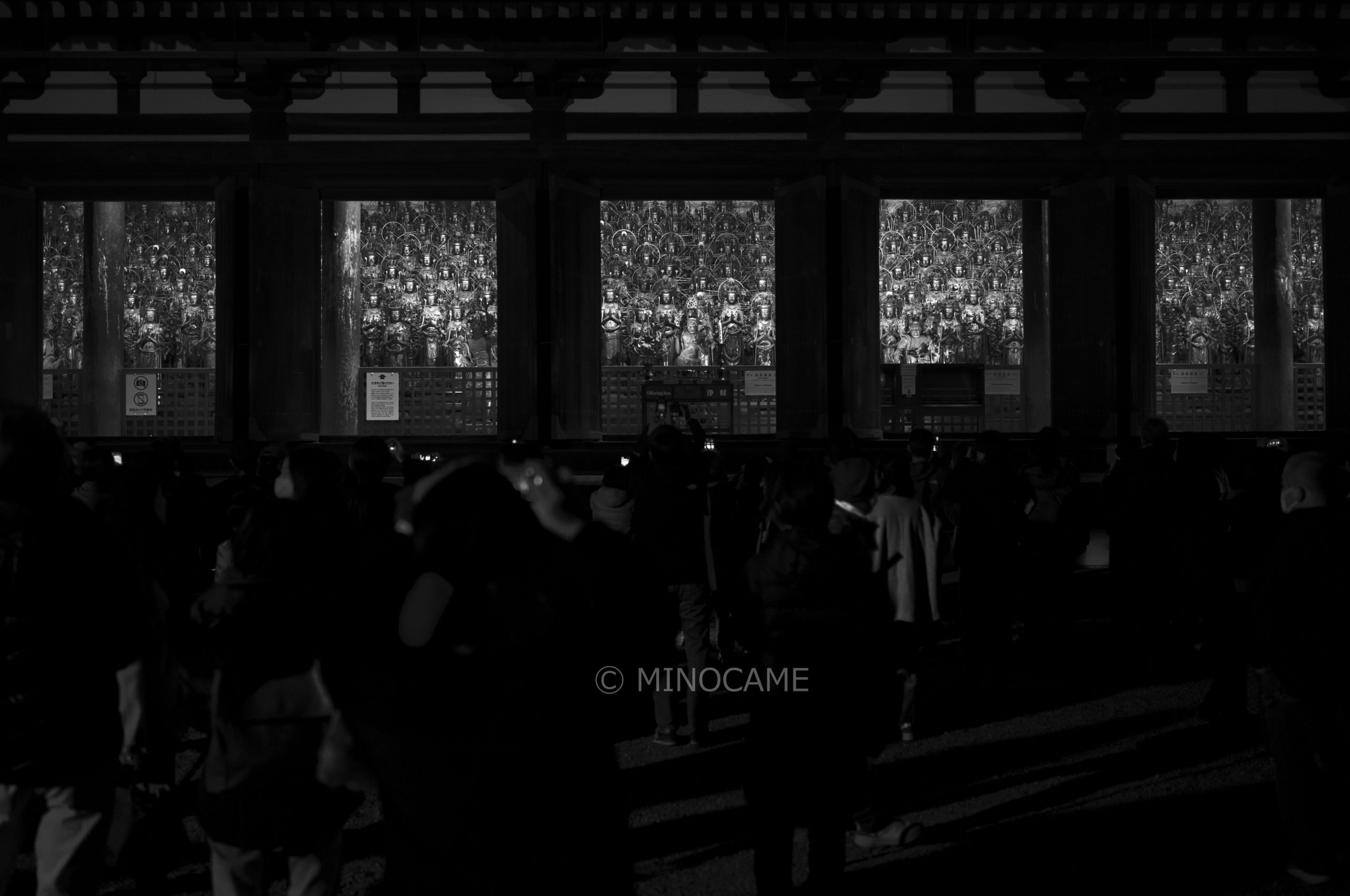
Inside the temple, you can see 1,001 human-sized wooden carved statues of the Thousand-armed Kannon, the Goddess of Mercy, arranged in ten rows and fifty columns on each side of Japan’s longest historical wooden hall, which measures 120 meters.
Once lost during a fire in the Kamakura period in 1249, the original 124 statues were saved. Other 877 sculptures were recreated immediately after the fire in their original Heian style by leading Buddhist sculptors of the time, including sculptors from the Kei school. The main seated statue of Kannon, which is the principal image of worship, was completed around 1255 under the direction of the revered Kei sculptor Tankei (1173–1256).
Night exhibition
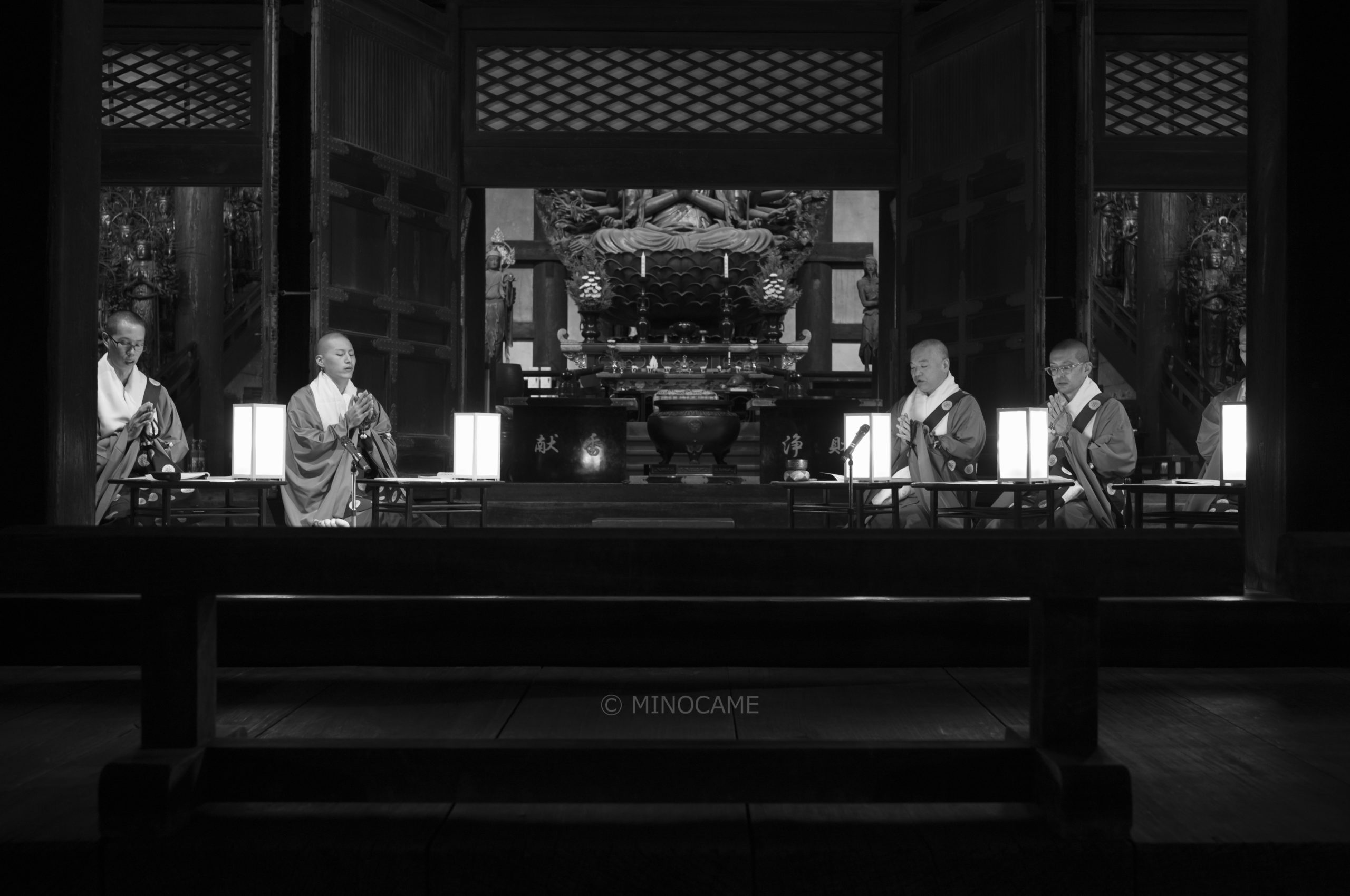
Until now, the administration office has never allowed photography or video. However, they have arranged only a three-night special opportunity on November 22nd, 23rd, and 24th, 2025, when people can enter the precinct and admire the beauty of the alignment of over one thousand statues. In the long history of the temple since 1164, this is the first night exhibition, and it may be the last chance. We appreciate that the officers arranged such an unprecedented opportunity for citizens and travelers in Japan.
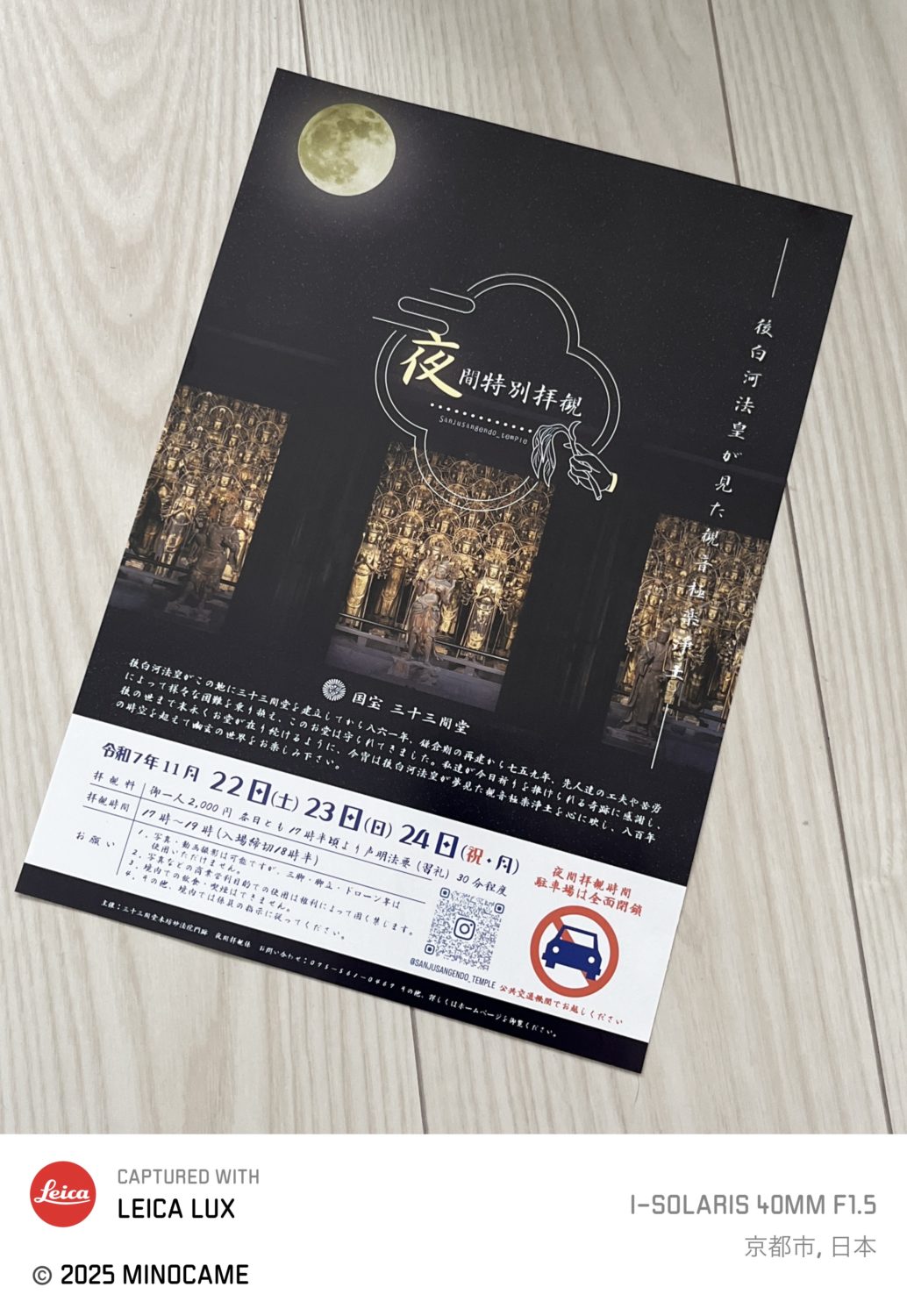
Image of the night event
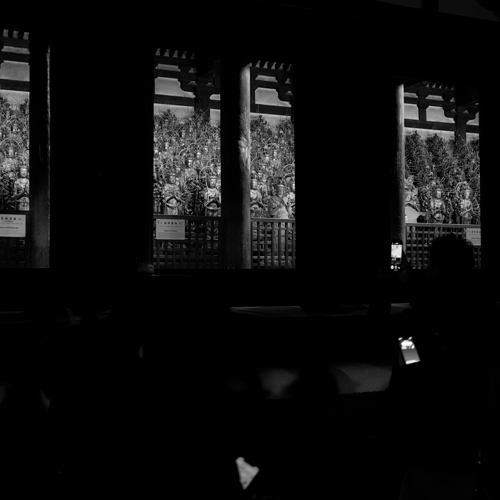
Here is the images, which I took in Nov 22nd and 24th
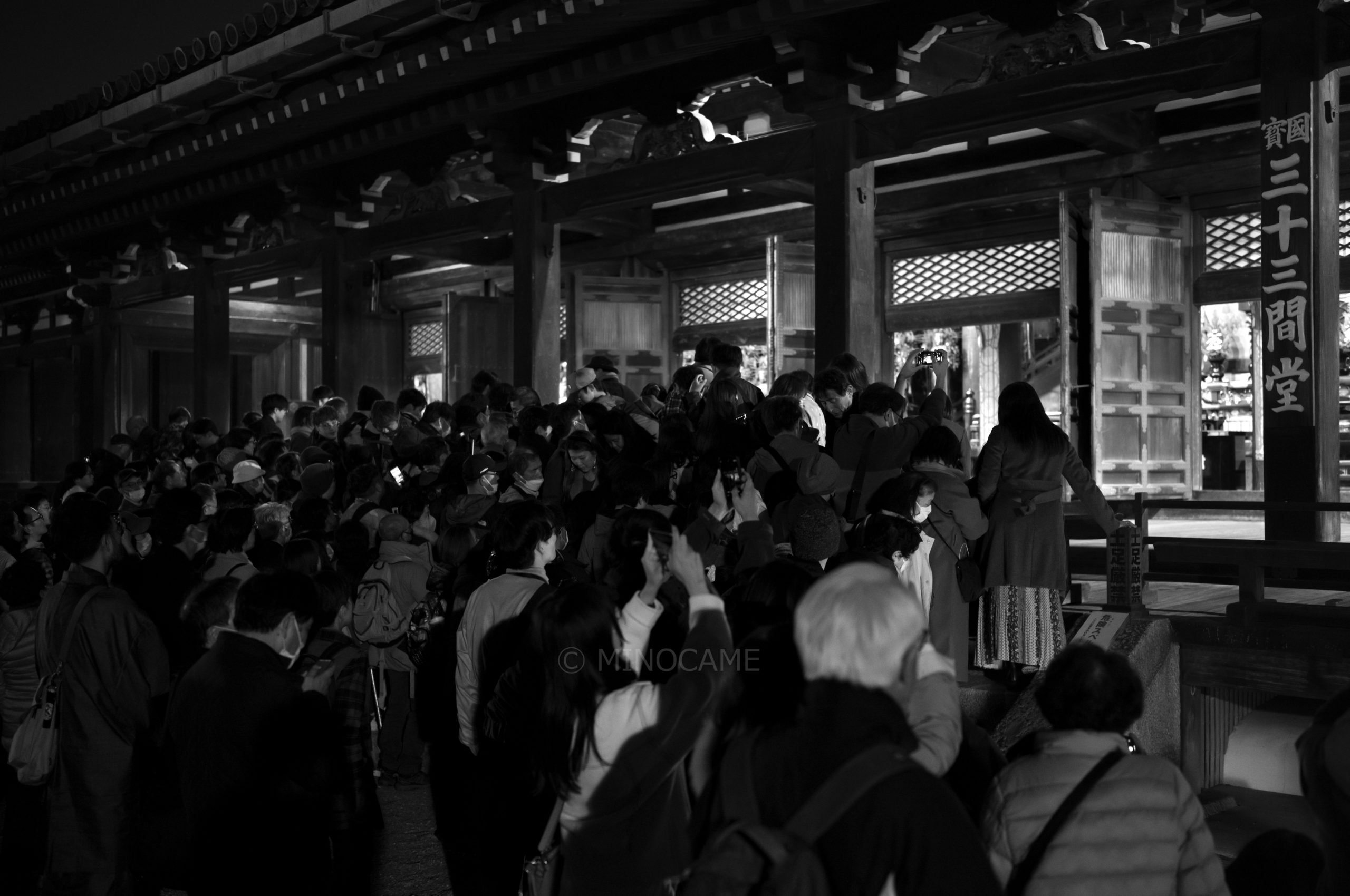
APO-Summicron 35mm f/2